
Designing for Comfort and Connection at Kallangur State School
KALLANGUR, QUEENSLAND, AUSTRALIA
Kallangur State School serves a growing population of about 900 students, with 83% of students and their families from the bottom half of the Socio-Educational Advantage Index. With a strong focus on success for every learner, the school prioritises high-quality educational environments that engage students from Prep to Year 6.
This new two-storey building adds eight General Learning Areas, connected by generous circulation spaces in the form of “covered verandahs” adjacent to all of the new classrooms. These verandahs extend learning beyond the classroom and reinforce a strong connection between indoor and outdoor spaces.
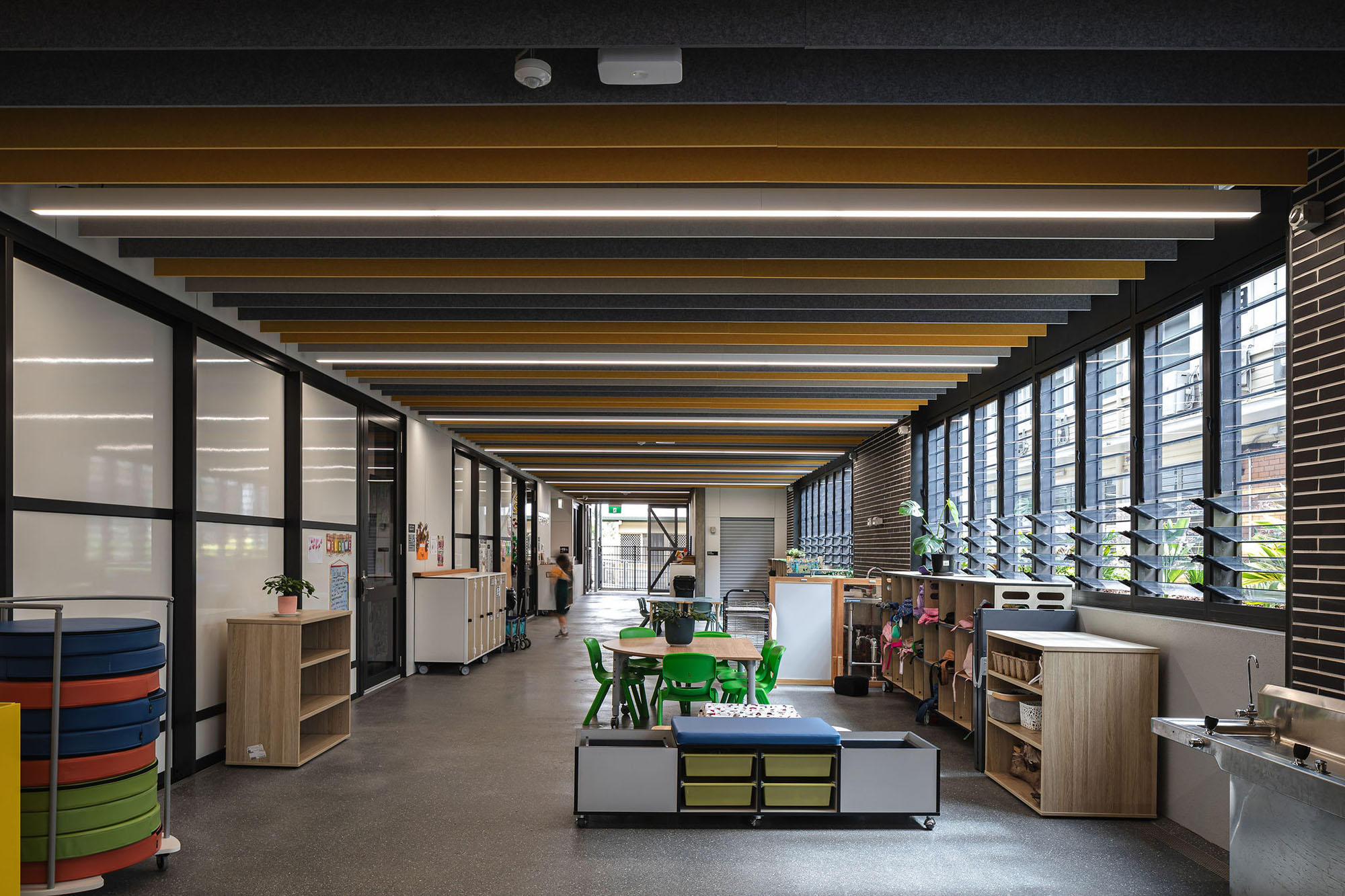
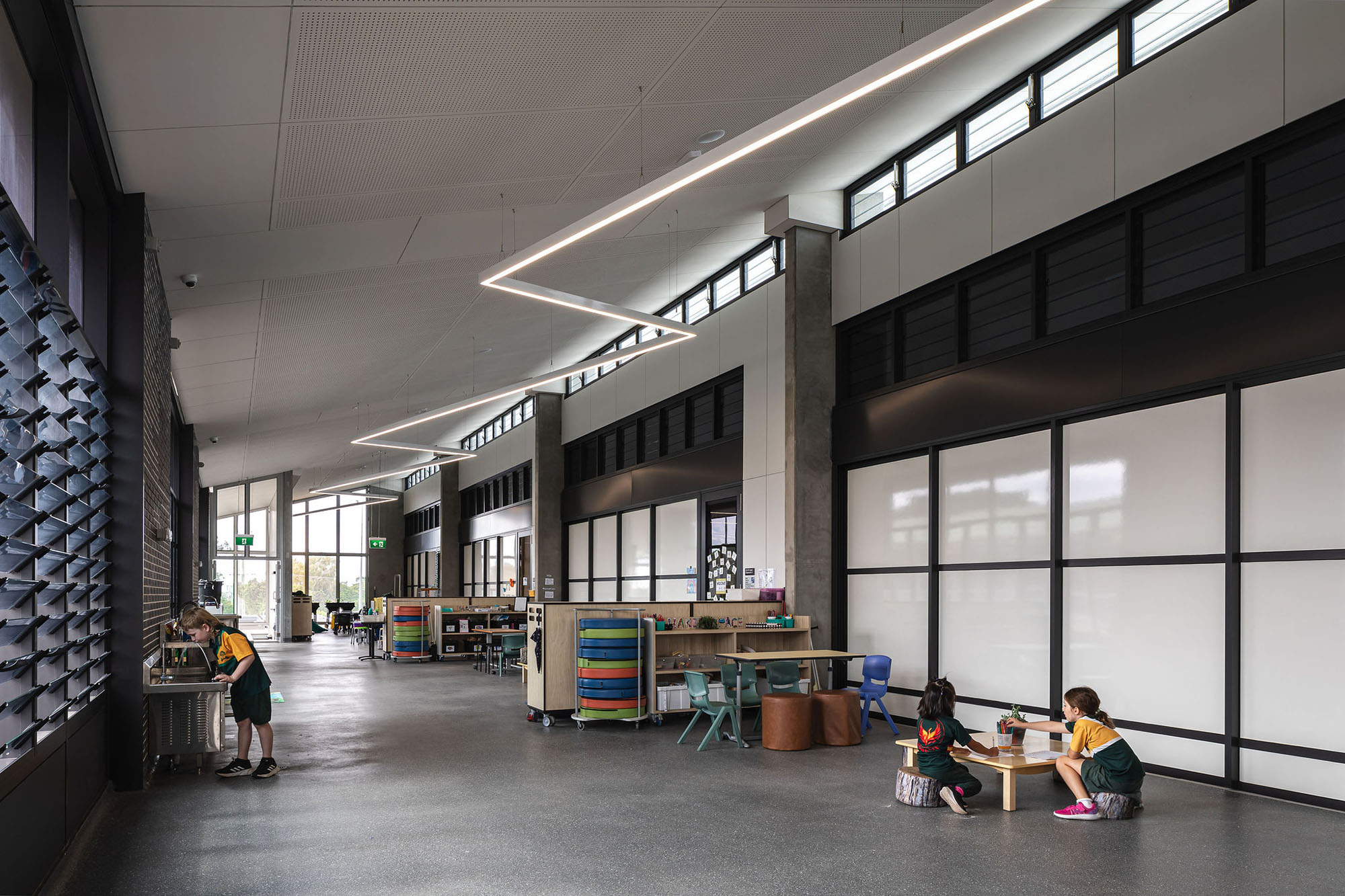
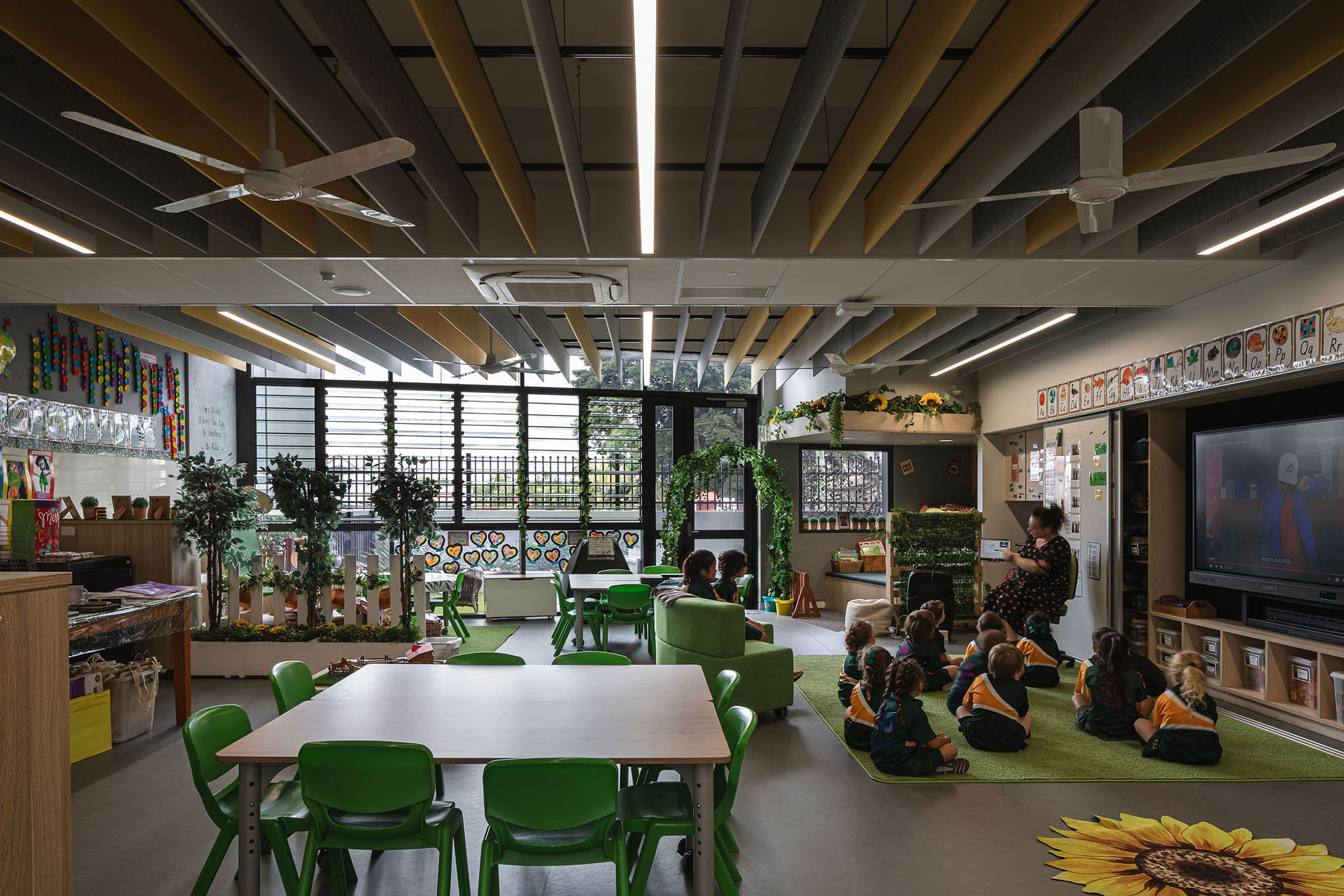
On the ground floor, classrooms open onto private individual courtyards with operable Breezway Louvres allowing teachers to modulate airflow and thermal comfort in response to changing conditions. This flexibility supports a wide range of teaching modes, while maintaining a strong visual and physical connection to outdoor learning spaces.
A subtle yet highly effective passive design strategy is evident in the angled southern glazed façades. Rotated 15 degrees from the perpendicular walls, this orientation excludes direct sunlight during school hours, reducing heat gain and minimising HVAC cooling loads without the need for additional shading infrastructure or ongoing operational energy use.
Further flexibility is achieved through operable walls that connect classrooms to the covered verandah circulation spaces rather than to adjacent classrooms. This enables learning areas to expand outward, creating adaptable, naturally ventilated environments that support collaboration, movement and informal learning.
Further “hidden potential” was unlocked along the southern elevation, where the new building interfaces with an existing structure. What was once a nondescript circulation zone has been transformed into an informal learning area through the integration of tiered seating and landscaping.
A neutral material and colour palette provides a calm, modest backdrop that highlights student work and interaction, while ensuring the building remains timeless, robust and adaptable. Together with the integration of Breezway Louvre Windows, the project demonstrates how passive design strategies can deliver comfortable, flexible and sustainable learning environments that are built to support both students and educators now and into the future.
Awards
2024 LEA Queensland Awards – Winner of New Building/s or Facilities – Small